


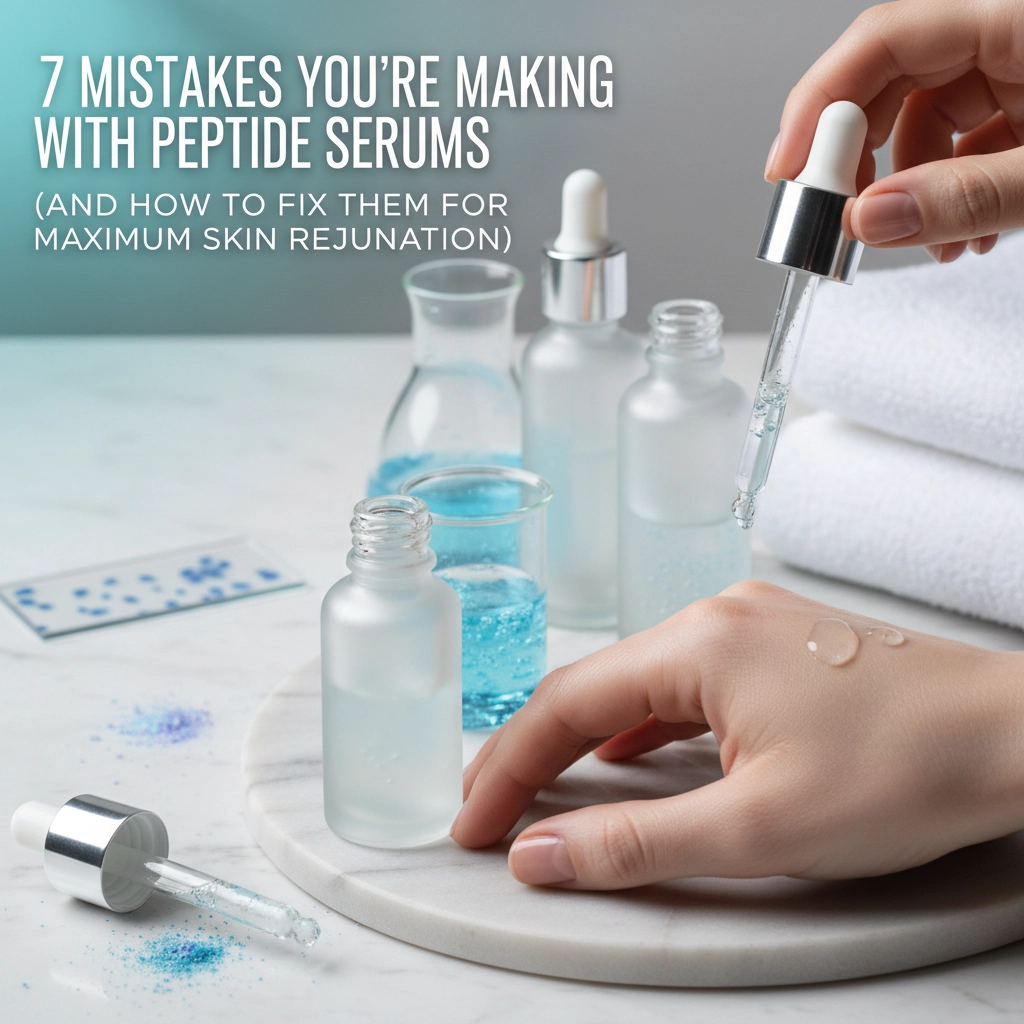
You've finally invested in that peptide serum everyone's raving about. You're excited about the promise of firmer, smoother, more youthful-looking skin. But after weeks of use, your results are… meh. Sound familiar?
Here's the thing: peptide serums are absolute powerhouses for skin rejuvenation, but most people unknowingly sabotage their effectiveness through common application and formulation mistakes. If you're not seeing the dramatic results you expected, you're probably making at least one of these seven critical errors.
Don't worry – I've got you covered. Let's dive into these peptide pitfalls and turn your skincare routine into the age-defying weapon it was meant to be.
Mistake #1: You're Rubbing Your Serum Instead of Patting
This might be the most expensive mistake on the list. When you rub peptide serum into your skin like you would a moisturizer, you're literally wiping your investment away. Most of that precious product ends up on your hands instead of penetrating your facial skin where it can work its magic.
Plus, all that rubbing creates unnecessary friction that can irritate your skin and actually counteract the anti-aging benefits you're trying to achieve.
The Fix:
Think of applying your peptide serum like you're giving your skin a gentle, upward massage. Pump 4-5 drops onto your fingertips and press the serum into your skin using gentle patting motions. Always work upward – gravity's already working against us, so let's not help it along!
This pressing technique doesn't just preserve more product for your skin; it actually enhances penetration by up to 15% compared to rubbing. Your skin (and your wallet) will thank you.

Mistake #2: You're Mixing Peptides with Acidic Ingredients
Here's where chemistry class becomes crucial for your skin. Using peptide serums alongside low-pH powerhouses like vitamin C, glycolic acid, or salicylic acid is like putting your peptides through a blender. The acidic environment literally denatures these delicate proteins, turning your high-end serum into expensive water.
I see this mistake constantly – you're excited about your multi-step routine, layering on the actives, but you're actually canceling out your peptides' benefits.
The Fix:
Create a pH buffer zone in your routine. After applying any acidic products (vitamin C serums, exfoliating acids), wait about a minute, then apply a buffering serum that brings your skin's pH back to around 5-5.5 – the sweet spot for peptide effectiveness.
Or better yet, separate these ingredients by timing. Use your acids in the morning and save your peptides for evening, when your skin naturally goes into repair mode anyway.
Mistake #3: You're Playing Ingredient Russian Roulette
Mixing multiple active serums without understanding their interactions is like throwing a cocktail party where the guests hate each other. Some combinations don't just reduce effectiveness – they can actually cause irritation and sensitivity.
Salicylic acid's exfoliating action can destabilize peptides, while other acids create hostile environments that break down these delicate proteins before they can work their rejuvenating magic.
The Fix:
Less is more when it comes to active ingredients. Choose one star performer per routine and give it the spotlight it deserves. If you absolutely must use multiple serums, space them out by at least 30-60 seconds between applications.
Think of it this way: would you rather have five mediocre conversations at a party, or one amazing, meaningful connection? Your skin feels the same way about skincare ingredients.
Mistake #4: You're Timing Everything Wrong
Timing isn't just important in comedy – it's crucial in skincare. Applying your peptide serum at the wrong time or using incorrect amounts can seriously limit its ability to penetrate and deliver those age-reversing benefits.
Too much product creates a film that prevents absorption. Too little won't give you adequate coverage. And applying it over residual makeup or oils? You might as well be putting it directly down the drain.
The Fix:
Start with clean, slightly damp skin – this creates the perfect environment for peptide absorption. Use a pea-sized amount (seriously, that's enough for your entire face), and apply it after cleansing but before your moisturizer.
Here's the golden rule: thinnest to thickest consistency. Your peptide serum should go on before heavier creams but after any toners or essences. And please, give each layer 30-60 seconds to absorb before adding the next product. Your skin needs time to drink in all that goodness.
Mistake #5: You're Using the Wrong Formula for Your Skin
Not all peptide serums are created equal, and what works for your friend's dry skin might wreak havoc on your oily complexion. Using a heavy, rich peptide formulation on acne-prone skin can clog pores, while a lightweight formula might leave dry skin feeling tight and irritated.
This mismatch is often why people think peptides "don't work" for them – they're not using the right vehicle for their skin type.
The Fix:
For oily or acne-prone skin: Look for water-based peptide serums with lightweight textures that absorb quickly without leaving residue.
For dry or sensitive skin: Choose peptide serums with additional hydrating ingredients like hyaluronic acid or ceramides. These combinations work synergistically to both repair and moisturize.
For combination skin: Use different formulations on different areas of your face, or choose a balanced formula that provides hydration without overwhelming oilier zones.
Mistake #6: You're Skipping the Prep Work
Imagine trying to paint a masterpiece on a dirty canvas – that's essentially what you're doing when you apply peptide serum over unclean skin. Residual makeup, oils, and environmental pollutants create a barrier that prevents your serum from penetrating effectively.
This prep mistake can reduce your serum's effectiveness by up to 40%. That's nearly half your investment going to waste!
The Fix:
Always start with a thorough cleanse using a gentle cleanser that removes impurities without stripping your skin. Think of this as clearing the runway for your peptides to land safely and do their job.
Here's a pro tip: your skin should be clean but not bone-dry when you apply your serum. That slight dampness actually enhances penetration for most peptide formulations. It's like giving your skin a drink of water before the main course.
Mistake #7: You're Expecting Overnight Miracles
This might be the most frustrating mistake because it leads to giving up too soon. Peptides work at the cellular level, encouraging your skin to produce more collagen and repair itself. This is deep, meaningful change – not a surface-level quick fix.
If you're expecting dramatic results after a week, you're setting yourself up for disappointment and might abandon a routine that would have given you incredible results with a little more patience.
The Fix:
Consistency is your secret weapon. Peptides typically show initial improvements around the 4-6 week mark, with more dramatic results becoming visible after 8-12 weeks of consistent use.
Think of it like starting a workout routine – you wouldn't expect abs after a week at the gym, right? Your skin needs time to rebuild and regenerate, but when it does, the results are worth the wait.
Set realistic expectations and stick with your routine. Take progress photos every few weeks so you can actually see the gradual improvements that might be hard to notice day-to-day.
Your Peptide Success Strategy
Now that you know what not to do, here's your game plan for peptide success:
- Cleanse thoroughly but gently
- Apply peptides to slightly damp skin using patting motions
- Wait 30-60 seconds before applying the next product
- Use acids and peptides at different times or create proper pH buffers
- Choose the right formula for your skin type
- Be consistent for at least 8-12 weeks
- Be patient – good things come to those who wait
Remember, peptide serums are an investment in your skin's future. When used correctly, they can dramatically improve skin texture, firmness, and overall radiance. The key is avoiding these common mistakes and giving your skin the consistent, proper care it deserves.
Your skin has incredible regenerative potential – you just need to create the right conditions for it to shine. With these fixes in place, you'll finally see the peptide results you've been dreaming of.
Ready to give your peptides the treatment they deserve? Your future self will thank you for making these simple but powerful changes today.